
News
A Modern Safety Solution for Zero-Downtime Cruise Ship Maintenance

 20261014142231.png (650.5 KB)
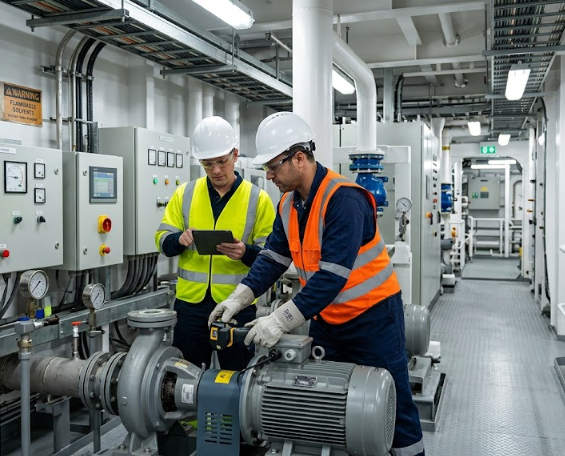
For safety officers responsible for cruise ship maintenance, balancing operational efficiency with onboard safety remains a constant challenge. Maintenance tasks often require cleaning, degreasing, component preparation, or contamination removal in areas containing electrical systems, fuel lines, machinery spaces, and sensitive equipment.
Traditionally, many maintenance products used for these activities contain flammable solvents. While these products may achieve the desired cleaning performance, they can create additional safety concerns that require extensive risk management measures. Hot work permits, temporary area restrictions, specialized ventilation, and fire-watch procedures can all increase the complexity of routine maintenance operations.
In a cruise ship environment, these challenges are amplified by several factors:
- High passenger occupancy
- Confined mechanical spaces
- Continuous vessel operations
- Strict compliance requirements
- Limited maintenance windows
Every maintenance activity that introduces a potential ignition hazard increases the burden on safety teams. Even small tasks can trigger extensive planning, isolation procedures, and operational disruptions.
The result is often a difficult trade-off between maintaining equipment reliability and preserving onboard operational continuity.
Modern Solution: NWK99 OPP and Non-Flammable Maintenance Technology
NWK99 OPP addresses these challenges through a safety-focused approach designed for modern industrial and marine environments.
The primary advantage of NWK99 OPP is its non-flammable formulation. By eliminating the fire risks commonly associated with traditional solvent-based maintenance products, it helps safety officers reduce exposure to one of the most significant hazards encountered during maintenance activities.
A non-flammable product can support safer maintenance practices by:
- Reducing ignition risk in operational areas
- Minimizing fire-related safety concerns
- Supporting work around sensitive equipment
- Simplifying maintenance planning
- Helping facilities maintain compliance with safety protocols
For cruise ship operators, this represents a meaningful shift away from maintenance processes that may require extensive fire-prevention controls.
Current Challenge: Downtime Impacts Revenue and Passenger Experience
Unplanned downtime is costly in any industry, but it is particularly disruptive aboard cruise ships.
Maintenance activities that require equipment shutdowns can affect:
- HVAC systems
- Mechanical equipment
- Electrical infrastructure
- Passenger comfort systems
- Operational schedules
When maintenance crews must wait for equipment cooldown periods, establish exclusion zones, or coordinate around flammable-product restrictions, the overall maintenance timeline often expands.
For safety officers, the challenge is not simply completing maintenance tasks safely. It is ensuring that work can be performed without negatively affecting vessel operations.
Modern Solution: Enabling Zero-Downtime Maintenance
One of the most significant operational advantages of NWK99 OPP is its ability to support zero-downtime maintenance strategies.
Because the product is designed for use without introducing flammability-related constraints, maintenance teams can often perform necessary work while systems remain operational, subject to site-specific procedures and safety assessments.
This approach delivers several important benefits:
Improved Operational Continuity
Maintenance can be integrated into normal operational schedules rather than requiring dedicated shutdown periods.
Increased Equipment Availability
Critical systems spend more time delivering value and less time out of service for maintenance activities.
Reduced Safety Administration
Fewer fire-risk controls may be required compared with flammable alternatives, reducing administrative workload and simplifying execution.
Enhanced Maintenance Efficiency
Technicians can focus on completing maintenance objectives rather than managing additional precautions associated with combustible products.
Why Safety Officers Should Consider NWK99 OPP
Safety leaders increasingly seek maintenance technologies that improve both risk management and operational performance.
NWK99 OPP aligns with this objective by addressing two critical requirements simultaneously:
- Protection of personnel, assets, and passengers through a non-flammable formulation
- Support for zero-downtime maintenance strategies that maximize operational availability
Rather than accepting the traditional compromise between maintenance effectiveness and operational continuity, safety officers can implement solutions that strengthen both outcomes.
The Future of Safer Cruise Ship Maintenance
As cruise ship operators continue to pursue higher safety standards and greater operational efficiency, maintenance products must evolve accordingly.
NWK99 OPP represents a modern solution for maintenance teams seeking to reduce fire-related hazards while maintaining uninterrupted operations. Its non-flammable characteristics help support safer working environments, while its compatibility with zero-downtime maintenance practices enables vessels to remain productive and available.
For safety officers, the value is clear: fewer fire risks, simplified maintenance planning, improved operational continuity, and a safer approach to keeping critical shipboard systems performing at their best.
- Next
- No next article.