
News
Current Challenge: Flammability Risk and Operational Downtime

 2026.03.20.jpg (16.8 KB)
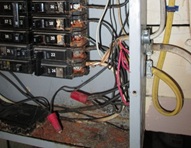
In the energy sector, safety officers
operate within a narrow margin for error. Facilities handle volatile
substances, high temperatures, and pressurized systems where flammability
risk is a constant concern. Traditional protective materials and
coatings often introduce unintended hazards, particularly when exposed to heat,
sparks, or chemical reactions. Even materials marketed as “low-flame spread”
can degrade under sustained stress, creating secondary ignition risks.
At the same time, maintenance procedures
frequently require system shutdowns. Whether inspecting pipelines,
repairing insulation, or applying protective layers, standard protocols often
demand isolating equipment to reduce fire risk. This creates a costly
trade-off:
- Safety vs. up-time
- Preventive maintenance vs. production continuity
For large-scale energy operations, even
short downtime windows can translate into significant financial losses and
logistical complications. Planned outages must be scheduled carefully, while
unplanned shutdowns introduce operational instability and regulatory scrutiny.
Additionally, safety officers must comply
with increasingly strict fire safety standards and workplace
hazard regulations. This raises a critical question: how can teams maintain
or improve safety without sacrificing operational efficiency?
Modern Solution: NWK99 OPP and
Non-Flammable Performance
NWK99 OPP addresses
this challenge directly by eliminating one of the core risks: material
flammability. Engineered with a non-flammable composition, it does
not ignite, sustain combustion, or contribute to fire propagation under
standard industrial conditions. This shifts the safety model from risk
mitigation to risk elimination at the material level.
From a first-principles perspective, fire
requires three elements: heat, fuel, and oxygen. Traditional materials can act
as fuel when exposed to sufficient heat. NWK99 OPP removes this variable,
meaning that even in high-temperature environments, it does not participate in
the combustion cycle.
Key Safety Advantages
- Non-flammable by design: Reduces
ignition risk in high-energy environments such as refineries, substations,
and turbine systems.
- Thermal stability: Maintains
structural integrity under sustained heat exposure, avoiding degradation
that could lead to secondary hazards.
- Compliance-ready: Supports
alignment with fire safety regulations and internal risk management
standards.
Enabling Zero-Downtime Maintenance
Beyond its fire-resistant properties, NWK99
OPP enables a significant operational shift: maintenance without
shutdown.
Because the material does not introduce
ignition risk, it can be applied or handled in environments that remain active.
This allows safety teams to move from reactive or scheduled shutdown
maintenance toward continuous, in-line maintenance practices.
How It Works in Practice
- Risk Assessment Simplification
With flammability removed as a primary concern, hazard assessments become more focused and predictable. Safety officers can approve maintenance tasks without requiring full system isolation. - Live-System Application
Technicians can apply or adjust NWK99 OPP in operational environments, reducing the need for depressurization or cooling periods. - Reduced Permit Complexity
Work permits involving hot work or fire risk can be minimized or streamlined, accelerating maintenance workflows. - Continuous Monitoring and Adjustment
Instead of waiting for scheduled outages, teams can address issues as they arise, improving asset longevity and reducing failure rates.
Example Scenario
In a gas processing facility, insulation
maintenance traditionally requires shutting down a section of piping due to
fire risk from nearby heat sources. By switching to NWK99 OPP, the
same maintenance can be performed while the system remains active. The result
is:
- No production interruption
- Lower labor coordination costs
- Reduced exposure to shutdown-related risks
Strategic Impact for Safety Officers
For safety officers, the adoption of NWK99
OPP is not just a material upgrade; it is a risk management strategy.
It enables a shift from controlling hazards to engineering them out of
the system.
This has measurable implications:
- Lower incident probability due
to elimination of combustible materials
- Improved safety KPIs through
reduced exposure scenarios
- Higher operational efficiency by
enabling zero-downtime maintenance
- Stronger regulatory positioning with
inherently safer materials
Implementation Considerations
To maximize the benefits of NWK99 OPP,
safety officers should:
- Evaluate current materials for flammability exposure points
- Prioritize high-risk zones such as heat-intensive or confined
areas
- Integrate NWK99 OPP into maintenance protocols and training
programs
- Monitor performance metrics pre- and post-adoption to quantify
impact
By aligning material science with
operational strategy, NWK99 OPP provides a clear pathway toward safer, more
efficient energy operations.
- Next
- No next article.