
News
Current Challenge vs. Modern Solution: Why Live Cleaning Actually Matters?

 20260325084703.png (149.9 KB)
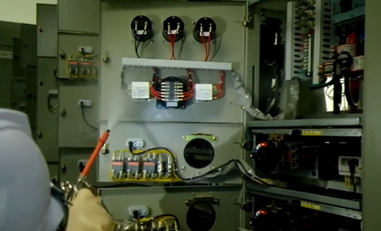
Current Challenge
In the energy sector, maintenance is not
just a technical task. It is a safety decision with direct consequences for
uptime, compliance, and personnel risk. When maintenance materials are flammable,
even routine work can trigger stricter controls, additional permits, and costly
shutdowns.
That creates a difficult pattern for safety
officers. Teams either delay maintenance to avoid risk, or they take systems
offline to complete it safely. In both cases, the result is the same: lost
production time, increased administrative burden, and greater exposure to
operational disruption. In high-hazard environments, that is an inefficient way
to manage risk.
Modern Solution
NWK99 OPP offers
a different approach. Its non-flammable nature reduces one of
the most serious concerns in live maintenance work: ignition risk. By removing
flammability from the equation, it helps teams perform maintenance with greater
confidence in active energy environments.
That matters because safety is not only
about preventing incidents. It is also about designing workflows that avoid
unnecessary exposure in the first place. A non-flammable maintenance material
supports that goal by lowering fire risk, simplifying planning, and reducing
the need for shutdown-dependent work.
For safety officers, the practical
advantage is clear. Zero-downtime maintenance becomes more
realistic when the material used does not introduce a combustion hazard.
Instead of scheduling work around outages, teams can complete essential tasks
while the system remains operational. This helps protect production continuity
without compromising the safety standard expected in the energy sector.
Why It Matters
A safer maintenance method should do more
than satisfy policy. It should reduce friction in the field. NWK99 OPP supports
that objective by combining two operational benefits: non-flammability and continuous-service
maintenance.
In practical terms, that means:
- Lower fire risk during application and use.
- Fewer interruptions to plant or site operations.
- Reduced dependence on shutdown windows.
- More flexible maintenance planning in safety-critical areas.
For energy-sector safety officers, the
value is not theoretical. It is measured in fewer interruptions, cleaner
maintenance planning, and a stronger safety posture during live operations. In
an industry where every stop has a cost, a non-flammable solution that supports
zero-downtime maintenance is a meaningful operational advantage.
- Next
- No next article.