
News
Eliminating Fire Risk and Downtime: A Modern Approach with NWK99 OPP

 dustfire.png (195.4 KB)
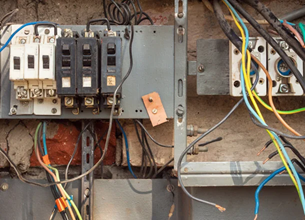
Current Challenge: Flammability and Operational Interruptions
In the energy sector, maintenance environments are inherently high-risk. Facilities routinely operate in the presence of heat sources, pressurized systems, and volatile materials. Under these conditions, the introduction of flammable protective products—whether coatings, cleaning agents, or temporary protection films—creates an additional layer of risk that safety officers must actively mitigate.
Traditional oil-based or solvent-heavy protective materials pose two persistent challenges:
Fire Hazard Exposure: Many commonly used products carry low flash points, increasing ignition risk during application or removal. Even minor sparks or elevated surface temperatures can trigger combustion.
Operational Downtime: To manage this risk, maintenance often requires equipment shutdown, cooling periods, and isolation procedures. These steps reduce immediate danger but introduce costly downtime, disrupt production schedules, and increase labor overhead.
For safety officers, this creates a trade-off between maintaining operational continuity and enforcing strict safety controls. In practice, this trade-off often leads to conservative decisions that prioritize safety but reduce efficiency.
Modern Solution: Non-Flammable Protection with NWK99 OPP
NWK99 OPP represents a shift away from this compromise. Engineered specifically for industrial environments, it addresses both safety and operational efficiency by eliminating the root cause of the problem: flammability.
At its core, NWK99 OPP is a non-flammable protective solution, meaning it does not ignite under standard industrial conditions. This single property has significant downstream implications for safety management and maintenance strategy.
Key performance advantages include:
Zero Fire Risk Contribution: By being inherently non-flammable, NWK99 OPP removes ignition potential from maintenance activities. This aligns with stringent safety frameworks such as ATEX and internal hazard reduction protocols.
Zero-Downtime Maintenance Capability: Because there is no need to eliminate ignition sources or cool equipment, maintenance can be performed while systems remain operational.
Reduced Permit Complexity: Non-flammable materials simplify hot work permits and risk assessments, reducing administrative friction and accelerating maintenance cycles.
Why Non-Flammability Changes the Safety Equation
From a first-principles perspective, industrial fire risk depends on three elements: fuel, oxygen, and an ignition source. Traditional maintenance materials inadvertently introduce fuel into environments where ignition sources are already present.
NWK99 OPP removes this variable entirely.
For safety officers, this translates into:
Fewer variables to control during hazard assessments
Lower probability of incident escalation
Increased confidence in conducting maintenance under live conditions
This is not merely a marginal improvement. It fundamentally changes how risk is modeled and managed on-site.
How to Implement NWK99 OPP in Maintenance Protocols
To realize its full safety and operational benefits, integration should follow a structured approach:
Audit Current Materials: Identify all flammable protective products currently in use across maintenance workflows.
Classify High-Risk Activities: Focus on tasks performed near heat sources, energized systems, or confined spaces.
Substitute with NWK99 OPP: Replace flammable materials in these workflows with NWK99 OPP to immediately reduce ignition risk.
Update Safety Documentation: Revise risk assessments, method statements, and permit requirements to reflect the non-flammable profile.
Train Maintenance Teams: Ensure personnel understand that while fire risk is reduced, standard operational discipline remains essential.
Practical Example: Live Equipment Maintenance
Consider a turbine maintenance scenario in a thermal power plant. Traditionally, protective coatings or cleaning agents require shutdown due to flammability concerns. This process can extend maintenance windows by several hours or more.
By switching to NWK99 OPP:
Maintenance crews can operate without shutting down the turbine
Fire watch requirements are minimized or eliminated
Total maintenance time is reduced, improving asset availability
The result is a safer working environment combined with measurable gains in operational efficiency.
Conclusion: Safety Without Compromise
For safety officers in the energy sector, the mandate is clear: reduce risk while enabling reliable operations. NWK99 OPP delivers both by removing flammability from the equation and enabling true zero-downtime maintenance.
This is not an incremental upgrade. It is a redefinition of how safety and productivity can coexist in high-risk industrial environments.